



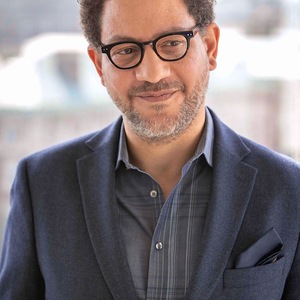

Prof. Colin Wayne Leach, Ph.D.
At Columbia University, Colin Wayne Leach (B.A. 1989, M.A. 1991, Boston University; Ph.D. 1995, University of Michigan) is Professor of Psychology & Africana Studies, Barnard College; Senior Research Scientist & Graduate Faculty in Psychology, Faculty of Arts & Sciences; Faculty Research Fellow, Institute for Research in African American Studies; Member, Data Science Institute; Affiliate Member, Zuckerman Mind, Brain, Behavior Institute.
Colin's previous faculty appointments include the University of Connecticut, University of California-Santa Cruz, and the University of Sussex in Brighton, England. He is an elected fellow of the Society of Experimental Social Psychology and Society of Personality and Social Psychology and has been a visiting scholar on four continents. He is a 2017 recipient of the Kurt Lewin medal from the European Association of Social Psychology, and he has been supported by the Ford Foundation and National Institutes of Health in the US, the European Science Foundation, and by national science foundations in the UK, the Netherlands, and Germany. Colin is currently Editor of Journal of Personality and Social Psychology (IRGP), former co-Editor of Personality and Social Psychology Bulletin, and former Associate Editor of Journal of Personality and Social Psychology, Personality and Social Psychology Bulletin, and the European Journal of Social Psychology.
Most of his research examines status and morality concerns in identity, emotion, and motivation. In addition to authoring nearly 100 journal articles and book chapters, he has co-edited the volumes Psychology as Politics (Political Psychology, 2001), Immigrant Life in the U.S. (Routledge, 2003), The Social Life of Emotions (Cambridge, 2004), and Societal Change (Journal of Social & Political Psychology, 2013).
Primary Interests:
- Culture and Ethnicity
- Emotion, Mood, Affect
- Ethics and Morality
- Intergroup Relations
- Personality, Individual Differences
- Political Psychology
- Prejudice and Stereotyping
- Research Methods, Assessment
- Self and Identity
Research Group or Laboratory:
Note from the Network: The holder of this profile has certified having all necessary rights, licenses, and authorization to post the files listed below. Visitors are welcome to copy or use any files for noncommercial or journalistic purposes provided they credit the profile holder and cite this page as the source.
Image Gallery
Video Gallery

Contested Legacies: Public Monuments in Global Perspective
Select video to watch
-
1:34:23 Contested Legacies: Public Monuments in Global Perspective
Length: 1:34:23
-
59:19 Journal Editors Discuss Diversity in Publishing
Length: 59:19
-
1:27:41 Feeling Black Lives Matter: The Psycho-Social Dynamics of Sentiment
Length: 1:27:41
-
3:35 How Images of Protest Have Been Impacted by Social Media
Length: 3:35
Books:
- Gabaccia, D., & Leach, C. W. (Eds.). (2003). Immigrant life in the U.S.: Multi-disciplinary perspectives. New York: Routledge.
- Tiedens, L. Z., & Leach, C. W. (Eds.). (2004). The social life of emotions. New York: Cambridge University Press.
Journal Articles:
- Brambilla, M. & Leach, C.W. (2014). On the importance of being moral: The distinctive role of morality in social judgment. Social Cognition, 32, 397-408.
- Ellemers, N., Pagliaro. S., Barreto, M., & Leach, C. W. (2008). Is it better to be moral than smart? The effects of morality and competence norms on the decision to work at group status improvement. Journal of Personality and Social Psychology, 95, 1397-1410.
- Gausel, N., & Leach, C. W. (2011). Concern for self-image and social-image in the management of moral failure: Rethinking shame. European Journal of Social Psychology, 41, 468-478.
- Gausel, N., Leach, C. W., Vignoles, V. L., & Brown, R. J. (2012). Defend or repair? Explaining responses to in-group moral failure by disentangling feelings of shame, rejection, and inferiority. Journal of Personality and Social Psychology, 102, 941-960.
- Iyer, A., & Leach, C. W. (2008). Emotion in inter-group relations. European Review of Social Psychology, 19, 86-125.
- Iyer, A., Leach, C. W., & Crosby, F. (2003). White guilt and racial compensation: The benefits and limits of self-focus. Personality and Social Psychology Bulletin, 29, 117-129.
- Jans, L., Leach, C.W., Garcia, R.L., & Postmes, T. (2015). The development of group influence on in-group identification: A multi-level approach. Group Processes and Intergroup Relations, 18, 190-209.
- Leach, C. W., & Spears, R. (2008). “A vengefulness of the impotent”: The pain of in-group inferiority and schadenfreude toward successful out-groups. Journal of Personality and Social Psychology, 95, 1383-1396.
- Leach, C. W., Ellemers, N., & Barreto, M. (2007). Group virtue: The importance of morality (vs. competence and sociability) in the positive evaluation of in-groups. Journal of Personality and Social Psychology, 93, 234-249.
- Leach, C. W., Iyer, A., & Pedersen, A. (2007). Angry opposition to government redress: When the structurally advantaged perceive themselves as relatively deprived. British Journal of Social Psychology, 46, 191-204.
- Leach, C. W., Iyer, A., & Pedersen, A. (2006). Anger and guilt about ingroup advantage explain the willingness for political action. Personality and Social Psychology Bulletin, 32, 1232-1245.
- Leach, C. W., Rodriguez Mosquera, P. M., Vliek, M. L. W., & Hirt, E. (2010). Group devaluation and group identification. Journal of Social Issues, 66, 535-552.
- Leach, C. W., Spears, R., Branscombe, N., & Doosje, B. (2003). Malicious pleasure: Schadenfreude at the suffering of another group. Journal of Personality and Social Psychology, 84, 932-943.
- Leach, C. W., van Zomeren, M., Zebel, S., Vliek, M., Pennekamp, S. F., Doosje, B. Ouwerkerk, J. P., & Spears, R. (2008). Group-level self-definition and self-investment: A hierarchical (multicomponent) model of in-group identification. Journal of Personality and Social Psychology, 95, 144-165.
- Leach, C.W. & Cidam, A. (2015). When is shame linked to constructive approach orientation? A meta-analysis. Journal of Personality and Social Psychology, 109, 983-1002.
- van Zomeren, M., Leach, C. W., & Spears, R. (2010). Does group efficacy increase group identification? Resolving their paradoxical relationship. Journal of Experimental Social Psychology, 46,1055-1060.
- van Zomeren, M., Leach, C. W., & Spears, R. (2012). Protesters as "passionate economists": A dynamic dual pathway model of coping with collective disadvantage. Personality and Social Psychology Review, 16, 180-199.
- van Zomeren, M., Spears, R., Fischer, A., & Leach, C. W. (2004). Put your money where your mouth is! Explaining collective action tendencies through group-based anger and group efficacy. Journal of Personality and Social Psychology, 87, 649-664.
Courses Taught:
- Emotion in Social Relations
- Introduction to Social Psychology
- Prejudice and Stereotyping
- Psychology of the Oppressed
- The Experimental Method
Prof. Colin Wayne Leach, Ph.D.
3009 Broadway
New York, New York 10027
United States of America
